So, you're thinking about an accessible bathroom for your place here in Bixby. Maybe it's for an aging parent, or a family member with a disability, or even just planning ahead for yourself. Whatever the reason, it's a smart move. I get a ton of questions about these projects, and honestly, there's a lot of bad information floating around. Let's clear some of that up, shall we?
What's the difference between ADA compliant and just 'accessible'?
This is a big one. ADA stands for the Americans with Disabilities Act. It's a federal law, but it mostly applies to public and commercial spots, not usually private homes. When I talk about 'ADA compliant' in a house, what I really mean is following those guidelines to make a space as universally usable as possible. 'Accessible' is a broader term. It means designing or changing a space so someone with a disability can use it easily and safely. For a home, we're usually aiming for accessible, using ADA guidelines as a solid starting point, but we can tailor it to your specific needs without being legally tied to every single public-space rule. For instance, a commercial bathroom might need a 60-inch turning radius for a wheelchair, but in your home, we might find a slightly smaller, custom solution that works perfectly for your specific chair and still gives you plenty of room to move.
Do accessible bathrooms have to look clinical or institutional?
Absolutely not. This is a common worry, and I totally get it. You've probably seen some pretty stark-looking accessible bathrooms in public places. But in a home, we can make them both beautiful and functional. We're talking about design that integrates grab bars that actually look like towel racks, stylish non-slip tiles, and vanity designs that allow for wheelchair access without screaming 'hospital.' There are some fantastic options for fixtures and finishes these days that are both practical and good-looking. Your accessible bathroom can be just as warm and inviting as any other room in your house, maybe even more so because it's designed specifically for your comfort and ease of use.
What are the absolute must-haves for a truly functional accessible bathroom?
Alright, if you're asking me for the non-negotiables, here's my list:
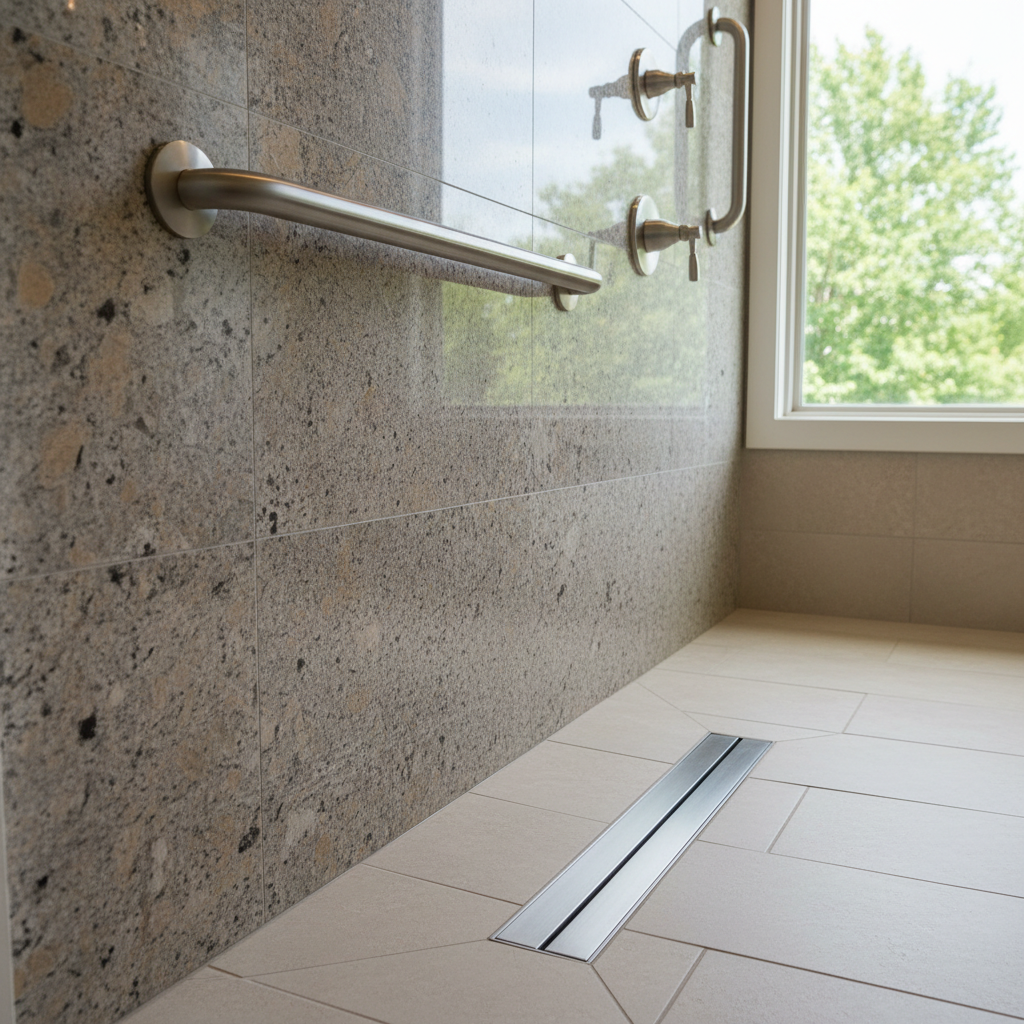
- Roll-in shower: This is huge. No curb to step over means no tripping hazard and easy access for wheelchairs or walkers. You'll want a good drain system and proper slope to keep water contained.
- Grab bars: Not just any grab bars, but strategically placed ones. In the shower, next to the toilet, and maybe even by the vanity. They need to be securely mounted into studs, not just drywall. I've seen too many DIY jobs where they pull right out.
- Wider doorways: Standard interior doors are often 28-30 inches. For wheelchair access, you're looking at 32-36 inches minimum. Sometimes this means a bit of structural work, but it's worth it.
- Reinforced walls: Even if you don't install all grab bars immediately, reinforcing the walls around the toilet and shower during a remodel means you can add them easily and securely later without tearing things apart.
- Adequate clear floor space: You need room to maneuver. For a wheelchair, a 30x48 inch clear space at fixtures is a good starting point, with a larger turning radius if possible.
How much does an accessible bathroom remodel typically cost in Bixby?
This is like asking how much a car costs, right? It varies wildly. A basic conversion, like adding grab bars, a comfort-height toilet, and a handheld shower, might be a few thousand dollars. A full-blown remodel, where we're reconfiguring the layout, installing a roll-in shower, a new accessible vanity, widening doorways, and upgrading all the finishes, could easily run anywhere from $15,000 to $40,000 or more. It depends on the size of the bathroom, the materials you choose, and how much structural work is needed. For example, if we're dealing with an older home in, say, the South Bixby area near the Arkansas River, the foundation or plumbing might need more attention, which adds to the cost. I always recommend getting a detailed quote after we've discussed your specific needs and chosen materials. At Omega Kitchen & Bath, we break down every cost so you know exactly what you're paying for.
Can I get any financial assistance for these modifications?
Sometimes, yes. It's not always straightforward, but there are options to explore. Medicare generally doesn't cover home modifications, but Medicaid programs in Oklahoma might. Veterans Administration (VA) benefits can be a huge help for eligible veterans through programs like the HISA (Home Improvements and Structural Alterations) grant. There are also state and local programs, non-profit organizations, and even some long-term care insurance policies that might offer assistance. It's worth doing your homework on this, or I can point you to some resources that can help you navigate these possibilities.
What about smart home tech for accessibility?
Oh, this is where things get really interesting and helpful! Smart tech can make a huge difference. Think voice-activated lighting, smart thermostats you can control from a tablet, or even smart shower systems that let you pre-set temperature and turn on/off with a voice command. Automated toilet seats with bidet functions are also popular. While not strictly 'accessible' in the traditional sense, these technologies can greatly enhance independence and comfort for someone with limited mobility or dexterity. It's definitely something to consider if it fits your budget and lifestyle.
How long does an accessible bathroom remodel take?
Again, it depends on the scope. A minor update could be a few days. A full remodel, especially one involving structural changes like widening doorways or moving plumbing, can take anywhere from three to six weeks, sometimes longer. Keep in mind that unexpected issues can pop up, especially in older homes. We always try to give you a realistic timeline upfront and keep you updated throughout the process. My team and I work hard to minimize disruption and get your bathroom functional as quickly and efficiently as possible.
What's the biggest mistake people make with accessible bathroom remodels?
The biggest mistake I see? Not planning for the future, or not planning for the specific future. People often think about current needs but forget that mobility can change. Or they try to cut corners on critical elements like proper grab bar installation or sufficient maneuvering space. You want this to be a solution that lasts and adapts. Don't just slap on a few grab bars; think about the entire flow and function of the space. Work with someone who understands universal design principles and can anticipate needs you might not even realize you have yet. That's where a good contractor comes in, someone who can guide you through the process and ensure you end up with a bathroom that truly serves its purpose for years to come.